Do you know what my favorite part of the game is? The opportunity to play.
Mike Singletary
Let me preface this whole spiel by saying I am talking about “pay-to-play” leagues. The ones where the parent pays a registration fee and their kid has a spot on a team. There has been a culture shift since I played sports as a young girl and teenager, and it’s not a good one.
I started playing soccer when I was around 5/6 years old. I fell in love with the game. My earliest memory of soccer is that one of my coaches was named Ursula. This was around the same time that Little Mermaid came out. I was both in awe and terrified of her. Not so terrified that I did not go on to play soccer competitively until I was 18 years old. There were seasons where I was on 3 teams at the same time. I loved the game.
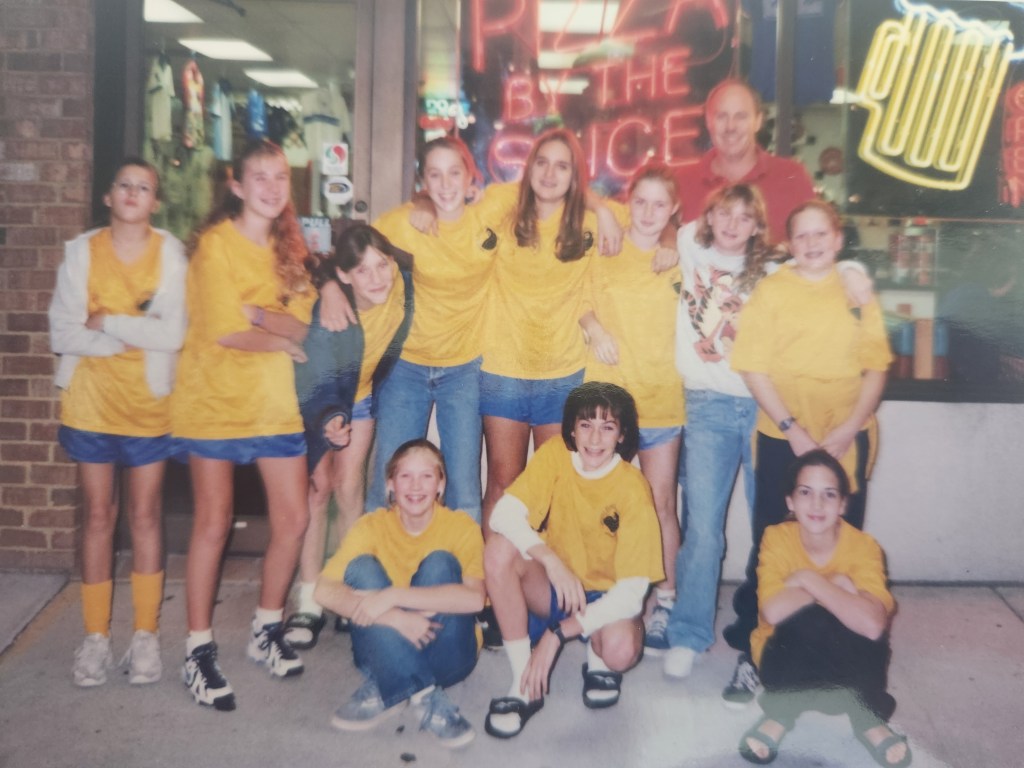
I can remember some wonderful coaches from my days with “Magic”. (That was our team name for my intramural soccer team from our little area of Virginia Beach.) We had Coach Paschall for a couple years. He was tough but fair. I think he really made us into a great group of girls who played for the love of the game. Then my dad came along to coach…*insert groan here*. Obviously he was hardest on me, meanest to me, most unfair to me. HOWEVER, now out of my angsty years, my dad is one of the coaches I look to as an example on how to coach young kids in a way that fosters a love for a sport that keeps them playing, and then coming back to coach. When I would complain I was not getting enough playing time, or he was playing the weakest player on our team, or he was playing such-and-such at a position she is not good at, after a withering disapproved stare and “We will talk about this later” he explained to me why he coached that way. In my dad’s philosophy, EVERY player gets equal playing time regardless of their skill level. (or as equal as possible) He wanted every girl on that soccer pitch to come off the field feeling like she made a contribution to the team, her presence was valued, and she couldn’t wait until practice that week to get to play again. My dad made sure that every girl got a chance to start in multiple games. If you showed up to practice, paid attention, and worked hard, you could try a new position if you wanted. If you had a bad attitude, even if you were the most skilled player, the sidelines were where you were standing and cheering on your team. And you know what, we earned a lot of gold trophies with that team, even with the coach’s goal not being to win.
On the flip side of my dad and Coach Paschall, I also remember the coach that, after over a decade playing and dozens of teams, made me hate the game. All this coach cared about was what your last name was and if he was friends with your parents. One girl and I, who were not his family friends, went from being starters on the team to not even playing a second of the last game of the season. It was to the point where my parents said other parents were asking if we had gotten into trouble or were failing any classes and that is why we were benched – which made me at least feel better that someone other than my family thought it was unfair. After that season, I did not touch a soccer ball again for 3 years. Then I thought, “This is stupid, I love playing soccer!” So in college I started playing again with friends in a co-ed intramural league where the point was more to have fun and drink beer after the game than to get wins. It brought back why I loved playing this game so much.
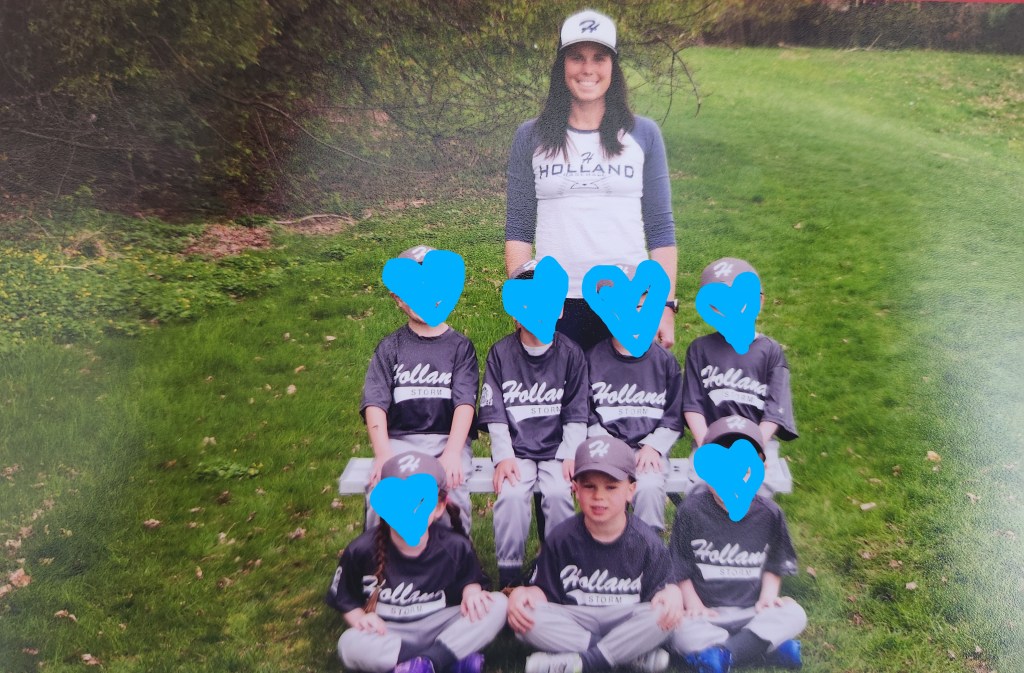
After getting married and moving to Whidbey Island, I decided I wanted to try coaching. I started coaching a kindergarten girls team – that was…fun. They were the Blue Birds (after the parents and I fortunately steered them away from naming themselves the Blue Balls) and they were adorable. I was asked to help coach a U16 girls team during that same season. Those girls were also…fun. Both of them were great learning opportunities on how to deal with the players and the parents. The next season I was fortunate to coach a U10 girls team who were AMAZING. By far, favorite age group. They played hard, listened, knew a little bit about the sport already. Since then, I have coached some teams in Minneapolis and have started coaching Kip and Pax as they have decided to give soccer a go. All-in-all I have been coaching intramural soccer for over a decade, ages 5-16, boys and girls, so if anyone wants to explain to me about coaching sports to get results – which has happened with some male coaches – I also have a little bit of experience to back up my critiques. While some of the teams I coached have done really well and others not so much, I measure my success or failure as a coach if I see those same players back on the field the next season.
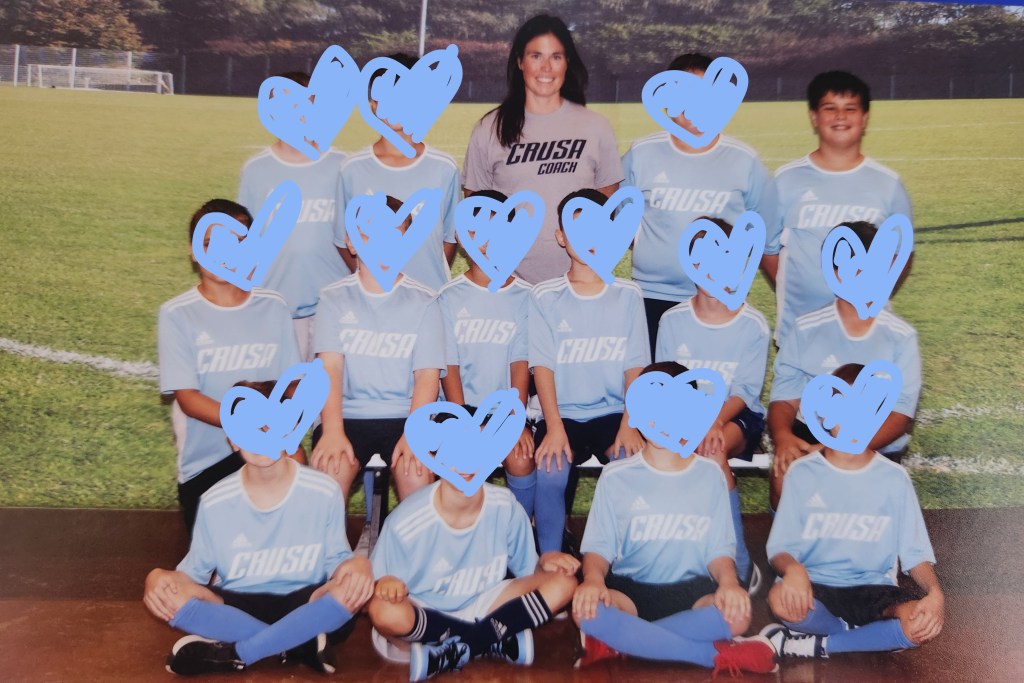
Youth sports, specifically intramural sports, are being ruined by parents and coaches. There, I said it. Parents are screaming at the officials from the sidelines, coaches are yelling in kids faces, people are being thrown off the field, kids are coming off the fields crying because their team did not win. What the heck happened to instilling a love of the game in children?! That is, quite literally, the point of intramural sports. Teach the kids the basics of the game, get them to play as a team, and enjoy whatever sport you are coaching. I have heard multiple dads say “Yea, we played really great and won that game.” I want to ask them, “So you laced up some cleats and went on the field to play against a bunch of 10-year-olds? I should hope you won!” Parents, you did not win, or lose, or even play. Your child did! That is one of the first ways I can tell if my kids coach is going to be great. If they refer to the team as “the boys” or “the girls” or “the team” and not talk about it in the first person, I know they get it. So so so many coaches do not get it anymore. And parents do not either. This is a game, this is a sport, these are kids that want to have fun and play and run. Winning is icing on the cake, but not the point of the meal.

JP was blessed to have a Little League coach that exemplified sportsmanship. Jim Clark has sons that are skilled baseball players. He probably works with them at home, but their natural talent is also apparent. Naturally, this led Jim, also a baseball lover, to get into coaching Little League. Jim coached in a way that values talent but awards sportsmanship. During one game, Jim’s son had a rough outing as a pitcher. I don’t remember what the stats were but I think there were a bunch of walks, like all pitchers have from time-to-time. Some of the kids on their team were visibly frustrated and angry with Jim’s son. When he was replaced as pitcher, his son slowly walked to the dugout, head hung low and tears in his eyes. In the dug out, Jim later told parents, there was only one kid on the team who came and sat next to his son to cheer him up. Saying things like, “It’s just a game. You know you are still a really good pitcher, right? You will do better next time, it’s only one inning.” That encouraging kid was not the best on the team. The next season, during the Opening Day Ceremony, Jim did not ask a star player to lead off the proceedings. He asked that encouraging little league-r to lead the league into a new spring season. Doubtless that encouragement from his past coach did more for his love of sport than any double-play or grand slam could ever.
Since we are in football season, I am going to equate this to our flag football league here in our slice of Bucks County. Before the season even began, we had an email from the league issuing a warning that yelling at officials or the other team, being generally unruly and being unsportsmanlike would earn you an ejection from the fields. After a second offense, your child would be removed from their team and your family would not be allowed to attend any flag football games. Our flag football league is K-8th. The littlest ones can’t tie their own shoes and the oldest can’t drive. What does it say about the prevalent atmosphere that the league has to issue this warning?
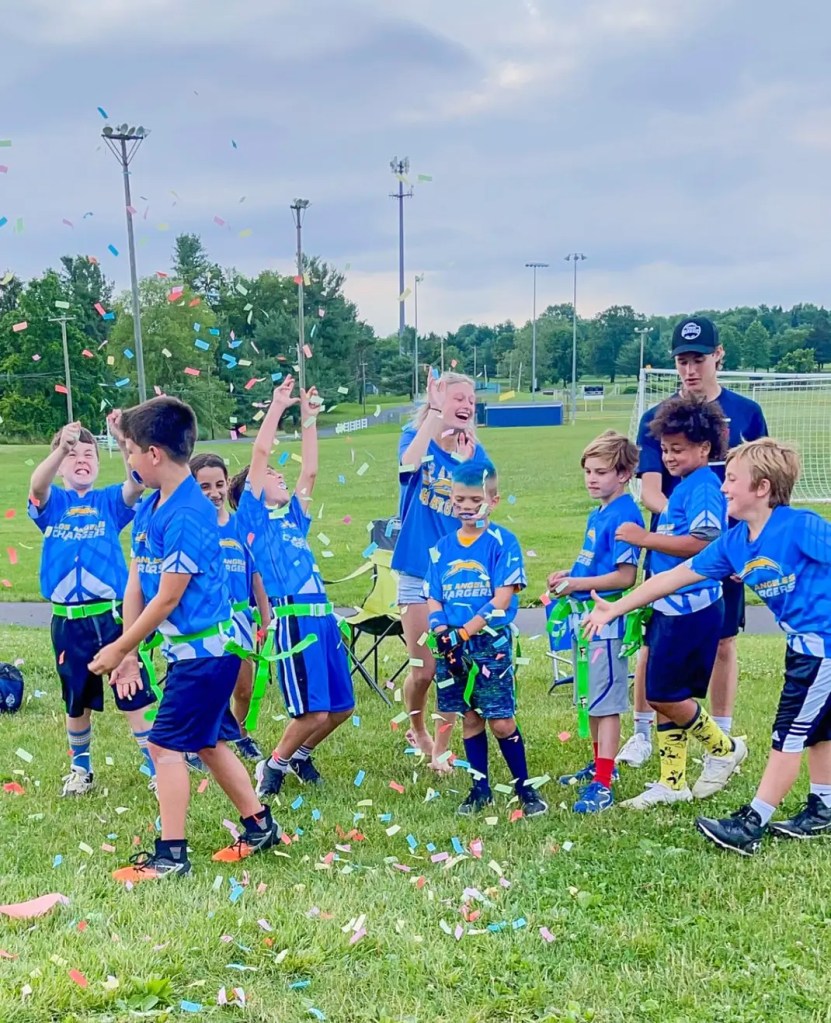
The officials in our league are in high school. Not legal adults. The amount of times I have seen grown adults screaming at the officials is embarrassing. To the point where the refs parents had to start coming to the game to defend their child who was making $25 to ref an 8-year-old flag football game. In our first year playing in the league (4 years ago) we were blessed with 2 great sets of coaches. JP ended up with 2 teenage kids who had aged out of the program. At first, us parents were very hesitant about having two kids coach our 3rd graders. It ended up being a fun season. Since they did not have kids on the team and didn’t have any relationship with us parents, the kids got to try a bunch of different positions and had a blast playing. They would do anything for those teenage coaches. They always came off the field laughing, win or lose. They also learned a bit of sportsmanship from those 2 coaches. Always hand the flag back to the player, never run your mouth on the field, always wear a mouth guard, let your coaches talk to the refs. That little team started out a joke and ended up making it to the championship game. Their female coach was very loud and could be obnoxious, but she was 15. As I mentioned, there were grown men and women screaming at her. To her credit, she never backed down.
Now, I will end this saga with, other than my dad, my Gold Standard of coaching. Kip’s coach that same flag season was Anthony Fittizzi. First, this team went undefeated for the season. That is not because they had unbelievable talent – though they had talent – or Anthony paid off the refs. I truly believe it is because Anthony taught the boys the way intramural sports are supposed to be coached, so those little first and second grade boys would give their hearts and souls on the field to make Coach proud. Not once that season did Anthony yell in the boys faces or at a ref. I’m not sure he ever raised his voice in anger at the boys. Anthony modeled the behavior he expected of his team – be disappointed, let your frustration be known respectfully, get on with the next play. He let multiple kids try their hand at quarterback, not only his kid. With the exception of a game or 2, every kid had a chance to run the ball or be a target for a throw. Every player came off the field during the game, even the most skilled. But the thing that sets Anthony apart, for me, is *George* (name changed since I didn’t get permission from his parents). I am still not sure how George got on a team of first and second graders when he was only 4 years old. Maybe his dad paid off the league? George’s flags practically dragged the ground he was so young. A lot of the time he wasn’t sure which way our team was trying to score or whose flags he should pull. George got the ball every game. His flag was usually pulled behind the line of scrimmage, but that did not stop Anthony from calling a play with him as the running back the next game. In the final game of the season, playing the Dolphins in a very close game to either win the championship or watch the undefeated season slip away, guess who still got the ball? Yep, George. And wouldn’t you know, it was his best run of the season, probably about 3 yards. I think Anthony celebrated those 3 yards more than the undefeated season. George also pulled a flag. And guess what else. George is now arguably one of the most skilled and hardest working players in his age group.

Unfortunately, since Anthony, we have not had similar experiences. Most of their coaches since then have played to win, not to instill a love of the game. It’s that way across the board in this league. The tackle kids, who know how to play, stay on the field the whole time while the less skilled and knowledgeable players are on the sidelines watching the action. Last season, the parents on one of the 3 teams were so embarrassing with their behavior towards the refs we usually sat apart from the team and left the field quickly after the game. Already this season an assistant coach has gotten in the faces and yelled at a bunch of first graders because they were “not paying attention to the game” after they had been on the sidelines over half the game. One coach on a different team was literally red in the face yelling at his players on the field who did not line up exactly how he wanted them to. Another of our boys asked his coach to try quarterback, his favorite position, but was told that was the coach’s son’s position so he wasn’t going to get a chance.
Maybe I was insulated as a player and did not notice the parents on the sidelines growing up. I do not remember screaming parents or coaches. I don’t remember coaches putting our worth as a team in winning. I know I loved to win but playing with my friends and playing with class was more important. When parents are having to bribe and force their kids to play, something is wrong. When kids are leaving the field crying after a loss or a missed play, something is wrong. If grown men think it’s appropriate to yell in first graders faces, something is wrong. When kids are leaving sports altogether, something is wrong.
As an intramural coach in most sports, you usually do not know what you are getting. The league assigns teams and sends out the rosters. You don’t know what background the kids are coming from. Maybe they are from a single-parent home and their mom or dad is out of the picture. Maybe dad is a workaholic and is hardly home but was a star high school athlete and rides their kid too hard. Maybe playing a sport is what makes their heart happy, even if they are awful at it. Maybe, like our boys, they have an involved dad but have never been able to have a game of catch with him; never even a high-five for a job well done. Maybe their parent berates them for a missed play and in their house winning games is what gives them value.
I believe that if you volunteer as an intramural coach you have a responsibility to every child that is on your team. You have the ability to either instill a love for the game or crush a kid. You can give these kids a joyful experience or you can make them feel like they aren’t worth the effort. As I was mansplained last weekend by the assistant coach that yelled in a foursome of 6- and 7-year-olds faces “I have been coaching for a while and I know how to get results”. I have a feeling I know the “results” that matter to that coach. I hope those plastic trophies, medals and souvenir t-shirts are really worth losing kids to the sport. That bragging around a fire pit with your Bud Light to the other coaches that your team has a winning record is worth making a child not want to play anymore. I know one 7-year-old who has already asked to leave his team and never play football again.
“Don’t think I did it for the fame, yea. I did it for love of the game, yea.”
 Tweed Thoughts